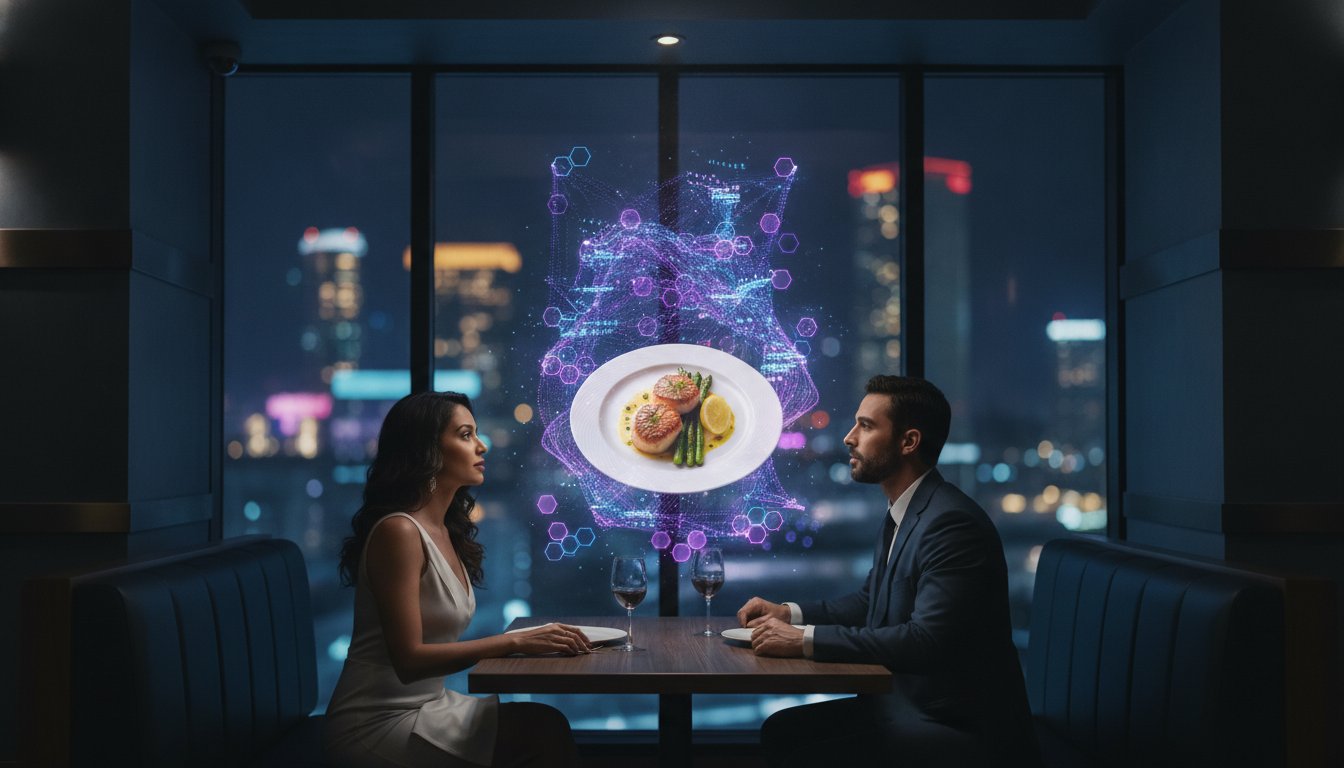
Why does ChatGPT steer hungry diners toward a competitor’s patio in Wynwood when your kitchen has more 2026 Michelin buzz? It’s a frustrating reality for Miami owners who see “AI-recommended” labels stealing their foot traffic. You’ve likely noticed that traditional search results are no longer the primary way people find where to eat in a city where retail rents now average $69.39 per square foot. You need to know how to get my restaurant recommended by AI in Miami before your legacy marketing budget loses its utility entirely.
We understand the technical confusion surrounding LLMs and the anxiety of being left behind by shifting technology. This article provides the exact Answer Engine Optimization strategies to ensure ChatGPT, Perplexity, and Google AI prioritize your tables. You’ll learn the roadmap for technical menu optimization and why high-authority citations have replaced traditional backlinks. We’ll preview how an AEO Audit can transform your digital footprint into a source of truth for the world’s most powerful AI models. It’s time to move beyond old-school SEO and claim your spot as the top recommendation in the Miami citation ecosystem.
Key Takeaways
- Understand the fundamental shift from traditional search results to Answer Engines that prioritize direct, conversational responses over ranked lists.
- Master the technical implementation of Restaurant Schema to help AI identify specific menu attributes like ingredients and dietary tags for better discovery.
- Learn how to get my restaurant recommended by AI in Miami by building authority within the local citation ecosystem, including the Michelin Guide and Eater Miami.
- Optimize for hyper-local and multilingual audiences to ensure your establishment remains visible in neighborhoods like Wynwood and Brickell across multiple languages.
- Discover why a technical AEO Audit is the essential first step to measuring your restaurant’s AI share of voice and citation accuracy in the 2026 market.
Beyond the Homepage: Why AI Recommends Certain Miami Restaurants
Your restaurant’s aesthetic appeal doesn’t translate to a Large Language Model (LLM) if your digital foundation is built on legacy code. In the 2026 Miami market, the shift from “Search Results” to “Search Answers” is complete. Diners no longer browse pages of rankings; they receive a single, authoritative recommendation from their AI assistant. This is why understanding how to get my restaurant recommended by AI in Miami requires a pivot toward Answer Engine Optimization (AEO). AEO is the process of making brand facts undeniable to Large Language Models.
While traditional SEO prioritized clicks and traffic, AEO focuses on validation and visibility within a single response. AI models function differently than Google’s old algorithms. They rely on complex logic to determine which establishment best fits a user’s prompt. Understanding how recommender systems work is essential for any owner looking to dominate the Magic City’s dining scene. If your data isn’t structured for these systems, your beautiful website remains essentially invisible to the very engines driving current foot traffic.
The Death of the PDF Menu
AI assistants like ChatGPT and Claude prioritize efficiency. They struggle to extract meaningful data from image-based PDF menus, which often lead to hallucinations or flat-out omissions. To win in 2026, your culinary data must be crawlable and text-based. When a diner asks for “the best keto-friendly octopus in Coral Gables,” the AI searches for specific ingredient tags and preparation facts. Hidden menu items locked inside a PDF won’t surface for these niche dietary queries, costing you high-intent customers who are ready to book a table.
Conversational Intent in the Magic City
Miami diners use natural language. They don’t type “Wynwood vegan restaurant”; they ask, “Where is the best late-night vegan spot in Wynwood with a patio?” Traditional keyword matching cannot solve this query. Instead, AI uses intent resolution to map the diner’s specific needs to your restaurant’s verified attributes. These engines prioritize authority over simple relevance. They look for consensus across the Miami citation ecosystem to confirm you are indeed the best choice. Learning how to get my restaurant recommended by AI in Miami means moving beyond keywords and toward building a verified digital identity that AI can trust.
Menu Optimization: Turning Your Kitchen into Structured Data
Structured data is the language of trust for AI engines. While a human diner looks at a glossy photo of your red snapper, an LLM looks for the specific code that validates its ingredients, price, and availability. To master how to get my restaurant recommended by AI in Miami, you must move beyond simple text on a page. You need a technical Menu-to-LLM pipeline that feeds these engines the exact data points they crave. AI doesn’t “taste” your food; it parses your data to determine if you’re a reliable recommendation.
Implementing Schema.org for restaurants is your first technical requirement. This structured data format allows you to define every element of your establishment in a way that AI can instantly verify. By linking your digital menu to real-time reservation availability through your schema, you provide the proof of utility that AI assistants use to prioritize one recommendation over another. If a diner asks for a table for four at 7:00 PM, the AI will only recommend spots it can confirm are open and available in that exact moment.
Advanced JSON-LD for Miami Chefs
Categorizing your offerings using the @type: Menu property is vital for visibility. You should break your menu into logical sections like appetizers, mains, and cocktails using MenuSection and MenuItem schema. Including priceRange and servesCuisine allows LLMs to filter your restaurant into specific categories, such as “affordable Italian” or “luxury steakhouse.” Consistency is paramount. Your physical address must match exactly across every data node to maintain high trust scores. If you’re unsure about your current technical standing, a professional AEO Audit can identify gaps in your data structure.
Optimizing for Dietary and Lifestyle Queries
Winning the “best allergen-friendly restaurants in Miami Beach” prompt requires granular tagging. You must explicitly tag ingredients for “Gluten-Free,” “Keto,” or “Vegan” discovery within your JSON-LD. Beyond the plate, you should tag your atmosphere. If your spot is “Dog-friendly” or has a “Lively bar scene,” these attributes must be in your code. Understanding how to get my restaurant recommended by AI in Miami involves more than just listing ingredients. Use Entity Linking to connect your restaurant to nearby landmarks like the Wynwood Walls. This helps the AI understand your geographic relevance and physical context within the city’s unique neighborhoods.
The Miami Citation Ecosystem: Influencing AI’s Trusted Sources
AI engines are sophisticated digital researchers. They don’t rely solely on your homepage to determine your quality; they look for a consensus of facts across the entire digital landscape. This “Validation Loop” is how engines like ChatGPT and Perplexity build confidence in their recommendations. If your data is consistent across Yelp, TripAdvisor, and Google, the AI perceives you as a high-trust entity. This consistency is a critical component of how to get my restaurant recommended by AI in Miami. When every source agrees on your hours, menu, and location, the AI can recommend you without the risk of providing incorrect information.
The hierarchy of trust is a tangible factor in AEO. AI models prioritize “seed sites” that have high historical accuracy and editorial standards. In the Miami market, this means citations from the Michelin Guide, The Infatuation, and Eater Miami carry immense weight. If these platforms mention your signature dish or your specific neighborhood vibe, the AI treats that information as a source of truth. You must audit your presence on local guides like the Miami New Times to ensure the facts they scrape are accurate. Securing mentions in “Best of Miami” listicles provides the third-party validation that moves you to the top of the AI’s selection list.
Managing Sentiment and AI Hallucinations
AI models can be prone to hallucinations if they encounter conflicting or overwhelmingly negative data. If a string of recent reviews incorrectly claims your restaurant is closed or has changed its concept, an AI might “hallucinate” this as a fact and stop recommending you. Responding to reviews is now a technical necessity. Your responses provide “fresh” data points for LLMs to ingest, serving as a secondary layer of validation. This active management corrects the narrative and keeps the AI’s understanding of your establishment current and positive.
The Role of Local Influencers and Bloggers
In 2026, a mention on a niche Miami food blog often carries more AEO weight than a traditional backlink. AI engines scrape these blogs to understand the “vibe” and specific culinary nuances that structured data might miss. These creators act as validators within the ecosystem. To understand where you stand in this complex network, you should start with a technical assessment. What is an AEO Audit? Securing Your Brand’s AI Visibility in 2026 explains how we map these citations to ensure your brand remains visible. By earning mentions from trusted local voices, you provide the structured evidence AI needs to prioritize your tables over the competition.

Hyper-Local AEO: Winning Wynwood, Brickell, and Coral Gables
Dominating a specific Miami block requires more than just a pin on a map. AI models categorize neighborhoods like Brickell, Wynwood, and Little Havana as distinct geospatial entities with their own unique characteristics. If you want to know how to get my restaurant recommended by AI in Miami, you must provide clear markers that link your establishment to local landmarks. Mentioning your proximity to the Kaseya Center or your role in the Art Basel circuit creates a relational map the AI can verify. These connections turn your physical location into a verified data point within the city’s digital geography.
Developing a dedicated “Local Proof” section on your website is a strategic move for 2026. This section shouldn’t just be a list of reviews; it should contain parseable facts about your neighborhood involvement and specific local accolades. By providing this data in a structured, text-based format, you make it easier for LLMs to validate your status as a “Wynwood institution” or a “Brickell power-lunch spot.” When the AI can cross-reference your claims with neighborhood data, your recommendation authority increases significantly.
Multilingual AEO for the Miami Market
Reaching Miami’s diverse population is essential for sustained growth. LLMs are now proficient at translating intent, which means a query for “mejor comida cubana” and “best Cuban food” should lead to the same authoritative result. You must use hreflang tags to signal language variants to AI crawlers. This ensures the engine understands that your Spanish and Portuguese content is a direct reflection of your primary brand facts. Consistency is key here. Your Spanish-language citations must match your English-language facts exactly to maintain high authority scores across all language models.
Capitalizing on Miami Tourism Trends
Tourism drives a significant portion of Miami’s dining revenue, and AI assistants cater to different traveler intents. They distinguish between “restaurants near Miami International Airport” for transient travelers and “hidden gems in Coconut Grove” for those seeking an authentic experience. Seasonal data is equally important. You should update your structured data months before Art Basel or the Miami International Boat Show to ensure you’re the top pick during these high-traffic windows. Understanding What is Answer Engine Optimization? The 2026 Miami Guide to AI Search helps you align your digital presence with these fluctuating tourism trends. To dominate your specific neighborhood, request an AEO Strategy tailored to your location today.
Securing Your Seat: How an AEO Audit Drives Restaurant Revenue
A Miami AEO Audit is the critical first step for any establishment looking to dominate the 2026 dining market. You cannot fix what you cannot measure. Most owners are flying blind, relying on outdated SEO metrics while AI assistants actively redirect their potential customers elsewhere. AEO is a defensive strategy against brand obsolescence. By identifying where your data is fragmented or missing, you reclaim control over your restaurant’s digital narrative. This technical assessment reveals exactly how to get my restaurant recommended by AI in Miami by pinpointing the specific gaps in your citation ecosystem and structured data.
The Mustache AEO approach is built on three distinct pillars: technical Audits, Strategic Roadmaps, and persistent Content Optimization. We don’t just provide a one-time fix; we build a sustainable infrastructure for AI visibility. This ensures that as LLMs evolve, your brand facts remain undeniable and authoritative. Our process moves beyond traditional keywords to focus on the high-authority citations that drive AI trust in the Magic City.
Tracking Your AI Visibility
Keyword rankings have lost their primary utility in the era of Answer Engines. You must shift your focus toward “Citation Counts” and “Share of Voice” within platforms like ChatGPT and Perplexity. If an AI provides a recommendation but doesn’t cite your restaurant as a source, you’re missing a vital validation layer. Utilizing the Best AEO Tracking Tools in 2026 allows you to monitor these citations in real-time. This Tracking & Reporting service also helps you gauge AI sentiment, ensuring that the model’s perception of your brand aligns with your actual culinary excellence.
Your 2026 AEO Roadmap
A successful strategy balances immediate technical corrections with long-term authority building. Short-term wins often involve schema implementation and directory cleanup to resolve conflicting facts. Once your foundation is stable, the focus shifts to earning high-authority mentions from the “seed sites” that AI models use to verify local expertise. This persistent effort builds a network of verification that automated systems cannot ignore. Your restaurant’s revenue in 2026 depends on being the definitive answer to a diner’s prompt. Don’t let your competitors capture the AI’s attention by default. Schedule your AEO Audit with Mustache AEO today.
Dominating the Magic City’s AI Dining Scene
The transition from traditional search to Answer Engines is a permanent shift in how Miami diners discover their next favorite table. To stay competitive, you must move beyond aesthetic websites and focus on the technical validators that LLMs require. This includes implementing robust Schema.org structures for your menu and securing high-authority mentions within the local citation ecosystem. We specialize in LLM visibility for the hospitality industry, providing the authoritative AEO Strategy roadmaps needed to navigate these complex systems. Knowing how to get my restaurant recommended by AI in Miami is the difference between a full dining room and digital obsolescence.
Mustache AEO offers the specialized Miami-local expertise required to audit your current standing and optimize your content for maximum visibility. We focus on building undeniable brand facts that AI assistants trust and prioritize for hungry diners in Wynwood, Brickell, and beyond. It’s time to claim your seat at the top of the AI recommendation list. Get Your Miami Restaurant Cited by AI—Book an AEO Audit and secure your establishment’s future in the evolving digital landscape. Your kitchen is ready; let’s make sure the AI knows it too.
Frequently Asked Questions
How do I get my Miami restaurant recommended by ChatGPT or Perplexity?
You must build a foundation of verified facts that Large Language Models can trust. This involves implementing structured data on your website and ensuring your establishment is cited by high-authority Miami sources like the Michelin Guide or Eater Miami. AI models prioritize consensus across the digital ecosystem. A technical AEO Audit identifies where your brand facts are weak or missing, allowing you to strengthen your authority within the conversational search landscape.
Does naming Miami neighborhoods like Brickell help my restaurant show up in AI?
Specific neighborhood identifiers act as geospatial anchors for AI models. When you mention Brickell, Wynwood, or Little Havana in your content, you help the AI understand your physical context within the city’s unique geography. It’s not just about naming the place; you must link your restaurant to local landmarks and events like Art Basel. This relational mapping ensures the engine recognizes your establishment as a relevant choice for hyper-local diner queries.
What is the difference between SEO and AEO for restaurants?
Traditional SEO focuses on ranking your website in a list of blue links, while AEO ensures you are the direct answer provided by an AI assistant. SEO prioritizes keywords and backlinks to drive clicks. AEO prioritizes structured data and high-trust citations to drive conversational recommendations. In the 2026 Miami market, the goal has shifted from being one of many results to being the single, authoritative recommendation that a diner receives.
Can AI read my PDF menu if I upload it to my website?
AI models often struggle to extract accurate data from image-based PDF files, leading to potential hallucinations or omissions. To ensure your kitchen is visible, you must use text-based, crawlable formats. Implementing Restaurant Schema allows you to tag specific ingredients and dietary options. This structured approach is essential for anyone wondering how to get my restaurant recommended by AI in Miami when diners search for niche preferences like keto or gluten-free.
How much does an AEO Audit for a restaurant cost?
The cost of an AEO Audit depends on the complexity of your current digital footprint and the number of locations being assessed. While we don’t provide flat-rate pricing without a preliminary review, we focus on delivering a comprehensive technical assessment that identifies your visibility gaps. This investment provides a clear roadmap for your AEO Strategy, ensuring your marketing budget is spent on high-impact optimizations that move the needle in conversational search.
How long does it take to see results from Answer Engine Optimization?
Initial improvements in data accuracy can appear within weeks as AI models crawl your updated structured data. However, building the deep authority required for top-tier recommendations is a long-term process. Most Miami restaurants see a measurable increase in AI citations and “Share of Voice” within three to six months of consistent optimization. This timeframe allows the AI to validate your establishment across multiple trusted sources within the Magic City’s citation ecosystem.
Is AEO necessary if I already have a 5-star rating on Google Maps?
A high rating is a positive signal, but it isn’t enough to secure an AI recommendation on its own. AI assistants look for technical verification and third-party validation beyond user reviews. They need to confirm your hours, menu details, and neighborhood relevance through structured data. Without AEO, an AI might ignore your 5-star rating because it cannot verify the specific facts needed to answer a complex diner prompt with absolute confidence.
What happens if ChatGPT gives wrong information about my restaurant?
Incorrect information, or “hallucinations,” usually stem from conflicting data across different online sources. You can correct these claims by performing a technical audit to identify the source of the misinformation. Updating your structured data and ensuring consistency across local Miami guides provides the fresh, accurate facts the AI needs. This proactive management of your digital identity is a core part of how to get my restaurant recommended by AI in Miami accurately.