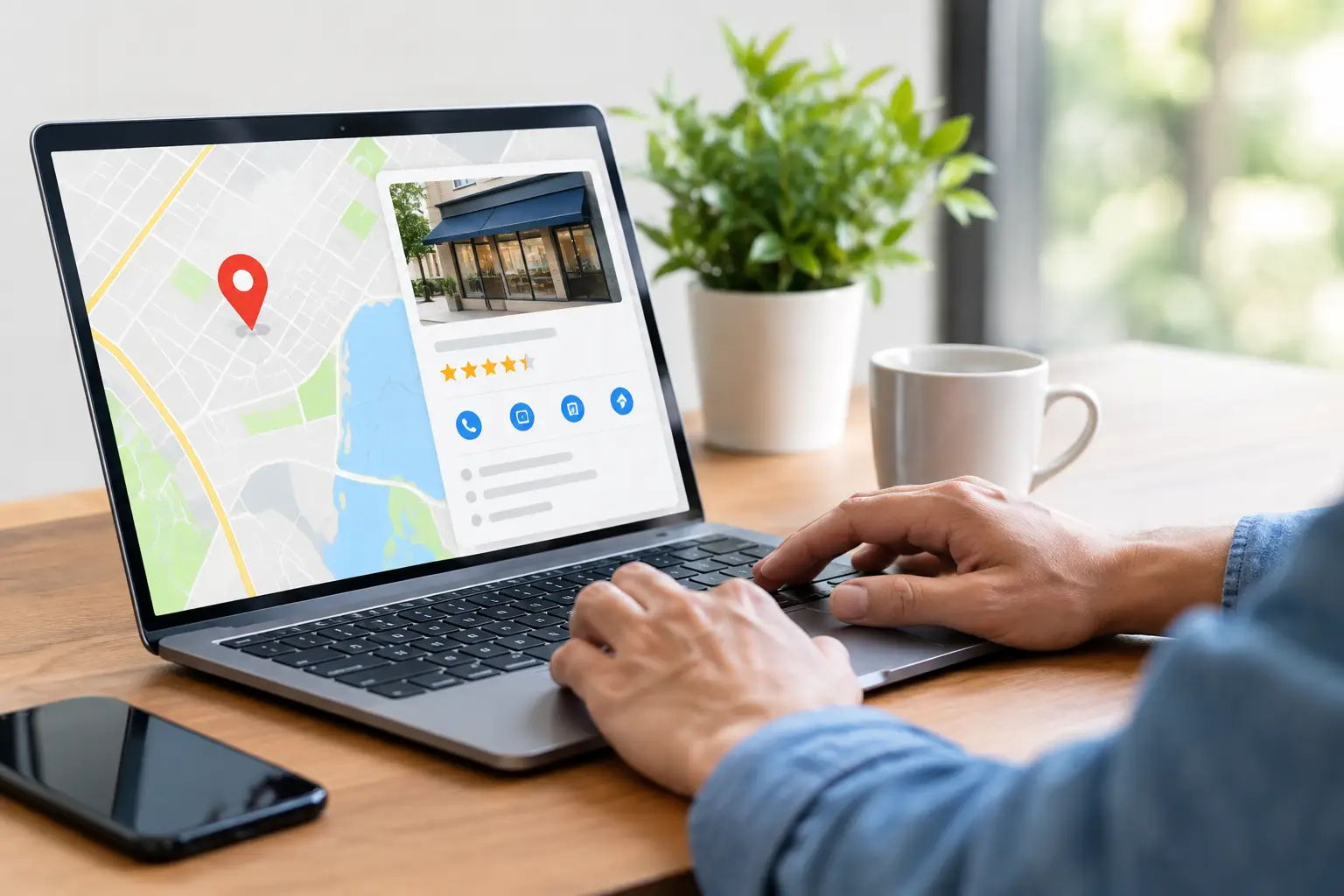
A prospect searches “emergency plumber near me,” “Miami business attorney,” or “best accountant in Coral Gables.” Before they reach most websites, they see the local map results. Your Google Business Profile is often the first sales page they encounter – and a neglected profile can send that lead straight to a competitor.
This Google Business Profile guide is built for businesses that need more than online exposure. The goal is to turn local searches into calls, direction requests, booked appointments, and qualified leads. That takes accurate business data, credible proof, active reputation management, and a profile that answers the questions buyers ask before they contact you.
Why Google Business Profile Still Drives Local Revenue
Google Business Profile, formerly Google My Business, powers how eligible businesses appear across Google Search and Google Maps. It gives searchers immediate details: what you do, where you serve, when you are open, how to reach you, what customers say, and whether your business looks active and trustworthy.
For a local service provider, that information can carry more weight than a polished homepage. A homeowner with a burst pipe does not want a brand story. They want to know whether you are open, nearby, qualified, and well reviewed. A law firm prospect wants the same kind of fast proof: practice area, location, reputation, and a clear way to call.
A complete profile does not guarantee a top map placement. Local visibility depends on relevance, distance, and prominence, along with the competitive reality of your market. But an incomplete or unmanaged listing makes it harder for Google to understand your business and easier for customers to choose someone else.
Set Up the Foundation Correctly
Claim or create your profile through your Google account, then complete verification using the method Google provides. Do not create duplicate listings because an old profile is hard to find. Duplicates divide reviews, confuse customers, and create avoidable cleanup work.
Your business name should match the name customers see in the real world – on your storefront, vehicle, official documents, and website. Do not add keyword strings such as “Best Miami Roofing Company” unless that is genuinely your registered, public-facing business name. Keyword stuffing may look like a shortcut, but it risks edits, suspension, and lost trust.
Use a local phone number when possible, add the correct website page, and make sure every detail matches your website and major business directories. Small inconsistencies matter. If your hours, suite number, or phone number conflict across the web, Google and potential customers receive mixed signals.
Choose Categories Based on Revenue, Not Guesswork
Your primary category is one of the strongest relevance signals on the profile. Choose the category that most closely describes your core service, not the broadest category available. A personal injury law firm should not default to a generic legal category if a more specific one applies. A med spa should not select categories based only on high-volume beauty terms that do not reflect its actual offerings.
Secondary categories can support related services, but restraint wins. Add categories that describe real lines of business and remove those that create confusion. If a category does not help a qualified customer understand what you offer, it probably does not belong there.
Define Your Location or Service Area Honestly
A customer-facing business should use its actual public address. A service-area business that visits customers at their homes or offices can hide its address and define the areas it serves. Do not use virtual offices, mailbox locations, or addresses where you do not genuinely operate.
Service areas help customers understand coverage, but they do not turn a Miami business into a local result across all of South Florida. Build a credible local footprint instead: clear service pages, location-relevant content, consistent citations, authentic reviews, and authority from trusted sources.
Write a Profile That Converts Searchers
The business description is not a place for corporate filler. Use it to state what you do, who you serve, where you work, and why a customer should trust you. Lead with the services that drive revenue. Add distinguishing proof where it is accurate, such as years of experience, licenses, response times, specialties, or languages spoken.
For example, a commercial HVAC company might explain that it provides installation, maintenance, and emergency repair for restaurants, medical offices, warehouses, and multi-location businesses across Miami-Dade. That is more useful than calling itself a “leading provider of innovative climate solutions.”
Add services individually where the profile allows. Use clear, customer-facing names and short descriptions that explain scope. This supports relevance for specific searches and helps prospects self-qualify before they call. Pricing can be useful when it is standardized, but do not publish vague teaser prices that create friction later.
Attributes deserve the same level of care. Accessibility details, payment options, appointment requirements, ownership attributes, and service options can affect customer decisions. Only select attributes you can consistently deliver.
Photos and Posts Are Evidence, Not Decoration
Stock imagery makes a profile look generic. Real images show customers that a real business stands behind the listing. For service businesses, upload branded exterior signage when relevant, team photos, completed work, equipment, office interiors, and before-and-after images when appropriate and compliant with your industry rules.
Quality matters, but authenticity matters more. A clean phone photo of a finished project, labeled accurately, can build more confidence than a glossy stock image. Update photos regularly so the profile reflects your current team, branding, vehicles, hours, and capabilities.
Posts can reinforce seasonal services, timely offers, events, new locations, and useful customer information. They are not a replacement for a content strategy, and they will not compensate for weak reviews or incorrect business data. Use them when you have a relevant reason to communicate, not because you feel pressure to publish empty updates every week.
Reviews Are a Lead-Generation System
Reviews influence rankings, but their bigger value is conversion. Prospects read them to judge reliability, responsiveness, pricing expectations, expertise, and service quality. A steady stream of genuine reviews creates proof that no ad copy can replicate.
Build a simple request process after a positive, completed customer interaction. Ask at the right moment, make the request direct, and train staff to use the same compliant process. Do not offer incentives for reviews, pressure customers for five stars, or ask employees and friends to inflate your rating. Those tactics undermine trust and can violate platform policies.
Respond to every review with care. Thank positive reviewers without repeating generic scripts. For negative feedback, stay calm, protect private information, acknowledge the concern, and offer a practical next step. A thoughtful response is not only for the reviewer. It is visible proof for the next prospect deciding whether to contact you.
Keep Your Google Business Profile Active and Accurate
Profile management is not a one-time setup task. Hours change, services evolve, staff members leave, holiday schedules shift, and customer questions reveal missing information. Review your listing at least monthly and any time your business makes an operational change.
Watch for user-suggested edits. Google and third parties can propose changes to your hours, phone number, category, or location details. Some edits are correct; others are not. Letting inaccurate information sit can cost calls and create poor customer experiences.
Use the performance data in your profile to identify patterns. Track calls, website visits, direction requests, messages when available, and the search terms that surface your listing. Do not judge performance from a single week. Compare periods, account for seasonality, and connect profile activity to leads and revenue in your CRM or call tracking system.
Connect Local SEO With AI Search Visibility
Google Business Profile is foundational local SEO, but it also supports a broader visibility strategy. AI-powered search experiences increasingly synthesize business information from multiple trusted sources. If your profile, website, reviews, press mentions, structured data, and local citations all tell the same clear story, your business is easier to understand and more credible as a recommendation.
That does not mean an optimized profile alone will make your company the cited answer in ChatGPT, Google AI Overviews, Gemini, Perplexity, or Bing Copilot. Those systems evaluate information differently, and visibility can vary by query. The practical advantage comes from building consistent entity signals across your digital presence while publishing useful content that answers high-intent customer questions.
For competitive local businesses, this is where a basic listing becomes a growth asset. Mustache AEO combines local SEO fundamentals with answer engine optimization so your business is positioned for map visibility, organic discovery, and the AI-generated answers shaping early buyer research.
Your next lead may decide in seconds whether your business is credible. Give them current information, specific proof, and a clear reason to choose you before they ever reach a competitor’s website.